- Product
- Tropheus duboisi 1.75" (pair)


Tropheus duboisi 1.75" (Pair)
Couldn't load pickup availability
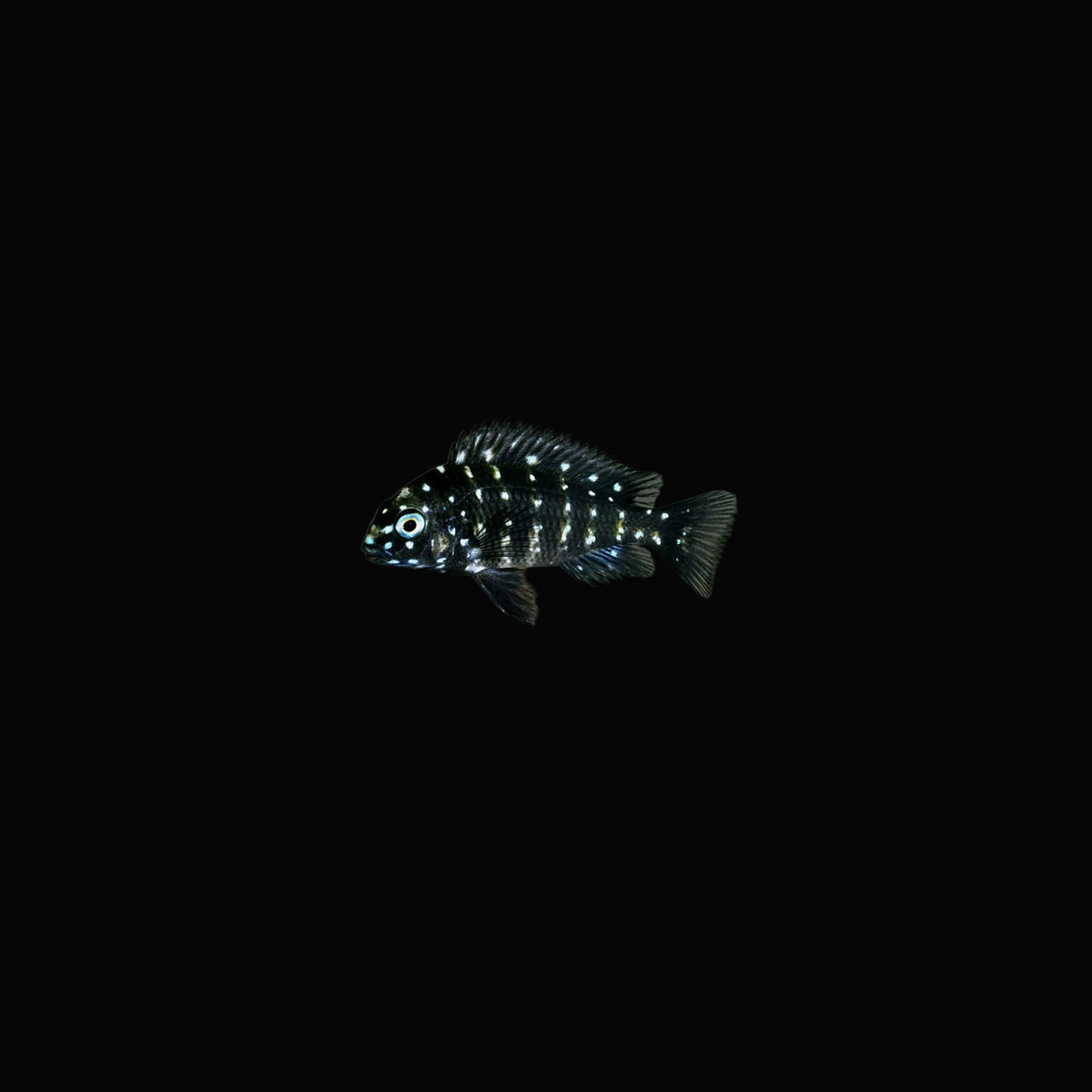
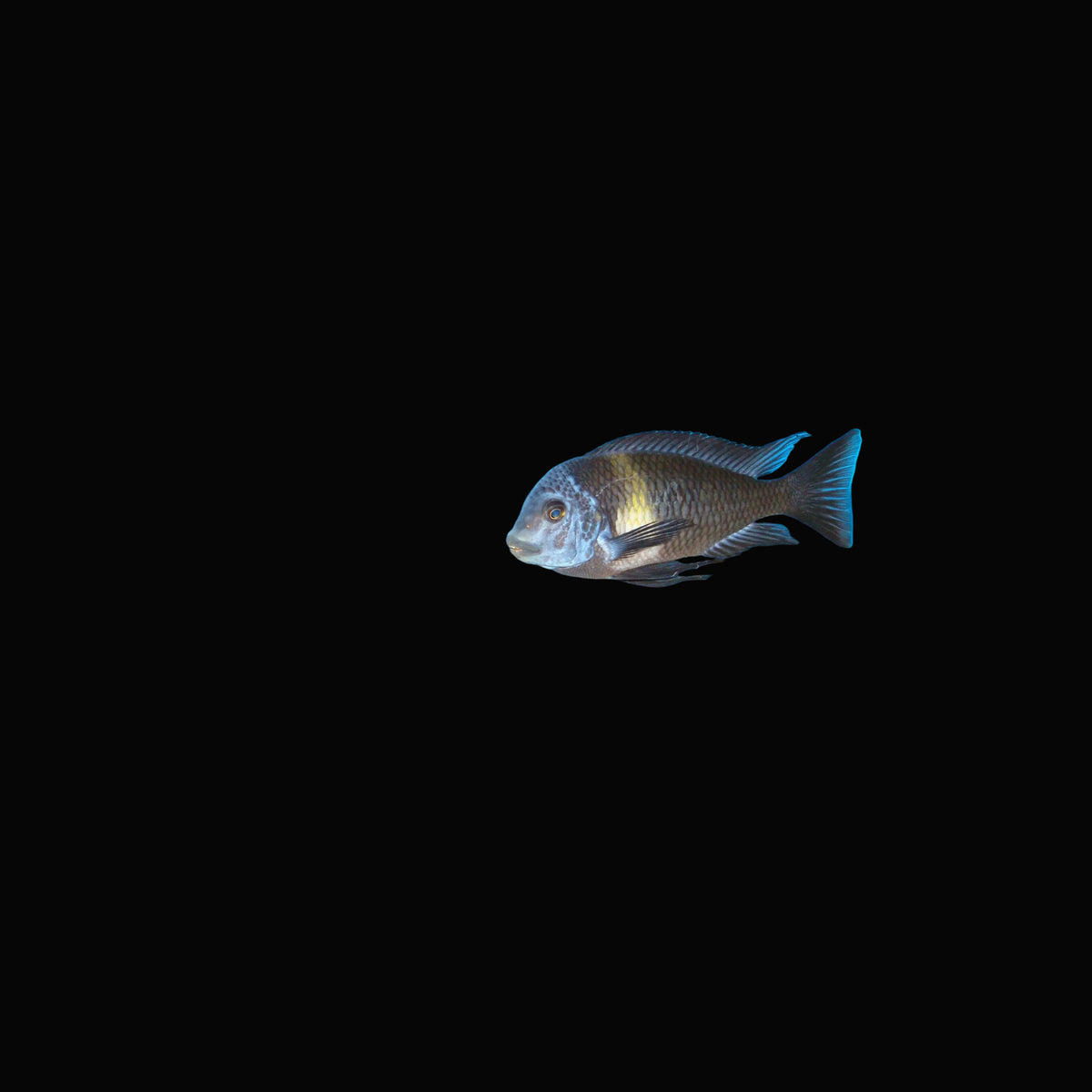
The juvenile is the famous one. Young duboisi are jet black, covered in clean white spots — one of the most recognisable patterns in any freshwater fish. As they mature the spots fade, the head turns blue-grey and a broad pale band appears across the body. Both stages are beautiful; just buy them knowing that the polka dots are temporary.
Duboisi is a described species in its own right, living a little deeper on the rocky slopes of northern Lake Tanganyika than most Tropheus moorii forms. It is a touch less boisterous than moorii but no less particular: a grazer with a delicate gut, a strict pecking order within its own species, and a low tolerance for unstable water. It also grows more slowly, which makes patience part of the setup.
A pair is a starting point, not a colony.
Duboisi spread their squabbling across a group, and a lone pair often ends with one fish bullying the other. If you want them long term, plan for eight to twelve of the same stock in a 120 cm tank, added together. A pair suits a large Tanganyikan community only if you can move a harassed fish out quickly.
Care Snapshot
| Scientific name | Tropheus duboisi |
| Also known as | White-spotted Cichlid, Duboisi, Blue-faced Duboisi |
| Family | Cichlidae — Lake Tanganyika Tropheini (rock-grazing cichlids) |
| Origin | Lake Tanganyika — deeper rocky slopes in the northern half of the lake; this stock is captive-raised for sale |
| Adult size | 10–12 cm |
| Arrival size | about 1.75 inch |
| Lifespan | 8–12 years with good care |
| Minimum tank | 250 litres for a group of 8–12, minimum 120 cm length |
| Temperature | 24–27 °C |
| pH | 8.0–9.0 |
| Hardness | 10–20 dGH — hard and alkaline |
| Diet | Herbivore — algae grazer, low-protein diet essential |
| Temperament | Squabbles with its own kind; best as a group of 8+ |
| Care level | Demanding — sensitive to diet and water swings |
| Swimming zone | Lower and middle, around the rockwork |
Setting Up For It
- Long, rocky and calm. 120 cm is the minimum for a group. Build broken rock piles with plenty of caves and gaps so a chased fish can vanish quickly.
- Slightly softer light suits them. Duboisi come from a little deeper than most Tropheus and settle well under moderate lighting, as long as there is enough light on the rock to grow a grazing film.
- Oxygen and flow. Turnover of six to eight times the tank volume per hour and visible surface movement. Rocky-shore grazers do poorly in still water.
- Small, matched water changes. 20–25% weekly, matched for temperature and hardness. Duboisi are among the less forgiving Tropheus when conditions jump.
- Add the group in one go. Fish added later are treated as intruders. Plan your full stocking before the first bag arrives.
Tank Mates
Good matches
Calm Tanganyikans that share the low-protein diet or keep their distance: Cyprichromis above, goby cichlids such as Eretmodus and Spathodus, and Synodontis petricola.
Keep away from
Any Tropheus moorii form or other Tropheus — the more boisterous moorii will dominate them. Frontosa, peacocks, haps and meat-fed cichlids, shell dwellers and all soft-water community fish.
Do not mix duboisi from different sources or locations in one group; band colour differs between populations and mixed stock cannot be sorted out later.
Feeding — Lean and Green
Tropheus are built to graze algae off rock: a very long gut, a slow digestion, and almost no tolerance for rich food. Too much protein, or poor-quality food that sits in the gut, leads to bloat — a swollen belly, white stringy droppings, hiding and refusal to eat. Caught on the first day it is often treatable; left for three, it usually kills, and it can run through a whole group.
Feed small pinches two or three times a day rather than one big meal. From the AQA range, a spirulina-based flake or small vegetable pellet should be the whole staple diet. Skip bloodworm, beef heart and high-protein pellets altogether, and if in doubt, feed less — a lean Tropheus is a healthy one.
Foods they graze happily: spirulina flake and pellets, blanched spinach and peas, cucumber and courgette slices, nori, and the algae film on well-lit rock.
Sexing & Breeding
Sexing is difficult at any size. Males generally grow larger and bolder, with a steeper forehead; females are smaller and rounder through the belly. At sale size, nobody can sex them reliably — which is why a “pair” here means two fish, not a guaranteed male and female.
A maternal mouthbrooder producing small broods of large eggs. The female holds for about four weeks and needs peace and good condition to carry to term. The fry are released already sizeable and showing the white-spotted pattern, and many survive in a rock-filled group tank.
Keeping It In Indian Conditions
- Hard borewell water is a head start. Most Bengaluru borewell and many municipal supplies are already hard and alkaline. Dechlorinate, test once, and use it — but keep the source consistent, because Tropheus mind sudden swings far more than a slightly-off number.
- Summer heat cuts oxygen just when grazers need it. Above 28 °C the water holds less oxygen and these fish get edgy and off their food. Run a fan across the surface and add an air stone through April and May.
- Plan for power cuts. A crowded Tropheus tank runs short of oxygen quickly once the filter stops. A battery air pump or inverter backup is cheap insurance.
- Buy good spirulina food and keep it fresh. Cheap, high-filler "cichlid" foods and old, damp tubs are a common route to bloat here. Buy smaller packs, keep them sealed and dry, and use them up within a couple of months.
- A heater in winter, set low. Bengaluru nights can drop the tank below 23 °C; a heater set at 25 °C keeps digestion steady without adding summer stress.
What You Receive
Two juveniles (sold as a pair), supplied at about 1.75 inch, quarantined and conditioned at our Bengaluru facility before dispatch. Sex cannot be guaranteed at this size, so the two fish may be any combination of males and females. They will be in the black-and-white-spotted juvenile pattern; the adult colouring takes many months. Packed with oxygen and insulation for pan-India delivery.
Covered by the Best4Pets live arrival guarantee. Please film an unboxing video before opening the bag — it is required for any DOA claim.