- Product
- Multi shelldweller 1" (pair)


Multi Shelldweller 1" (Pair)
Couldn't load pickup availability
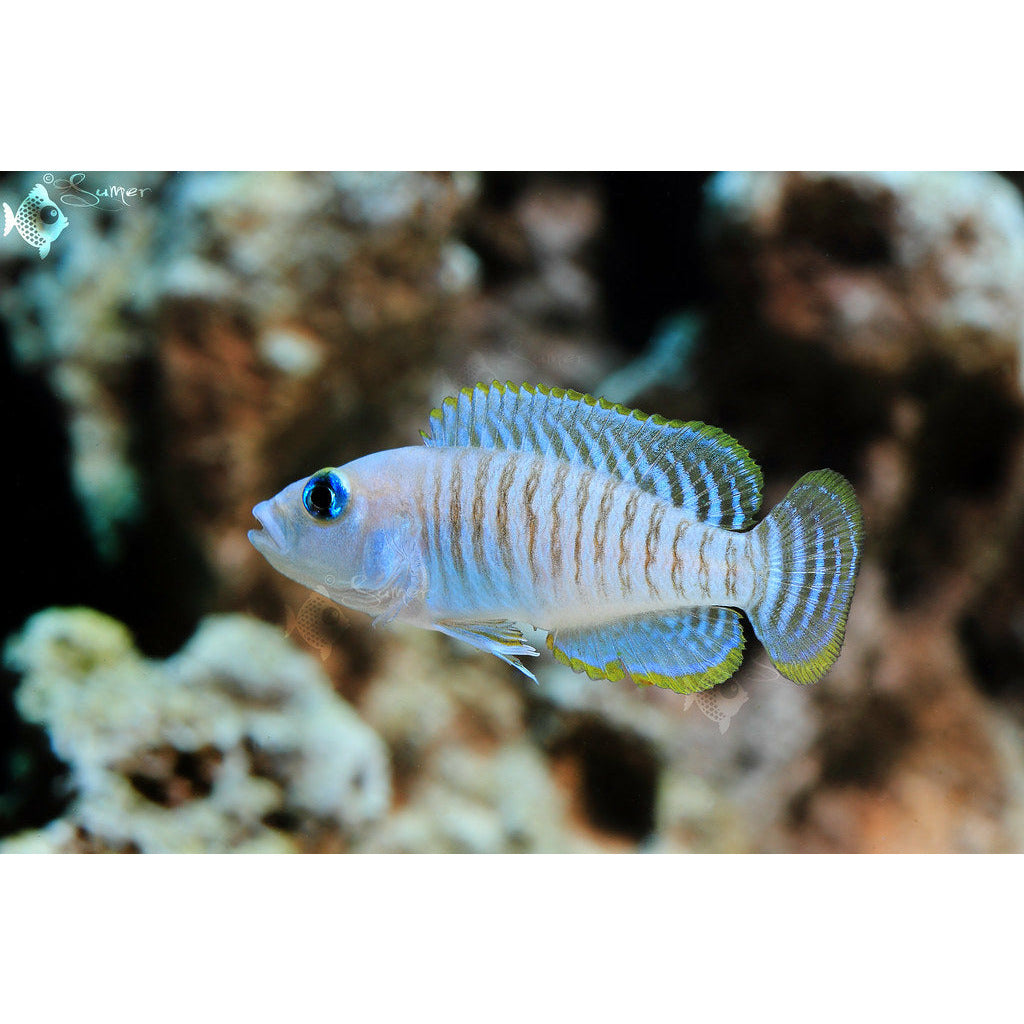
The smallest cichlid in the world runs a city. Fully grown, a male Multi barely reaches 5 cm, and the females are smaller still. Yet a colony of them will rebuild an entire shell bed — digging, burying, moving shells around and defending a patch the size of a palm. Each fish lives in its own shell and pops out to warn off neighbours, then vanishes back inside.
In Lake Tanganyika, Multis live in huge colonies on beds of empty snail shells. In a small aquarium they recreate that colony on a smaller scale, and it is one of the most absorbing things a small tank can hold. Faint vertical bars on a beige body and silvery-blue eyes are understated colour, but the behaviour is anything but.
Shells first: three per fish, in one big bed.
Multis are colony fish, and a colony needs territory. Start with a pair or a small group, but give them a shell bed large enough for the colony that follows. Short of shells, Multis fight; well supplied, they live peacefully side by side.
Care Snapshot
| Scientific name | Neolamprologus multifasciatus |
| Also known as | Multi, Multies, Multifasciatus Shell Dweller |
| Family | Cichlidae — Lake Tanganyika lamprologine cichlids |
| Origin | Endemic to Lake Tanganyika |
| Adult size | Males up to 5 cm; females 3–3.5 cm |
| Arrival size | about 1 inch |
| Lifespan | 5–8 years |
| Minimum tank | 40 litres for a pair, 60 litres for a small colony |
| Temperature | 24–27 °C |
| pH | 7.8–9.0 |
| Hardness | 10–20 dGH — hard and alkaline |
| Diet | Micropredator — zooplankton and tiny invertebrates |
| Temperament | Peaceful with others; defends its shell vigorously |
| Care level | Easy |
| Swimming zone | Bottom |
Setting Up For It
- Shells — more than you think. At least two or three per fish, laid in clusters on open sand. A shortage of shells is the commonest cause of fighting.
- Fine sand, 4–5 cm deep. They dig constantly, burying and uncovering shells and shaping the sand around them. Smooth sand or coral sand, never gravel.
- Small tanks are fine. A 40 litre tank suits a pair, 60–80 litres a small colony. Footprint matters more than height.
- Gentle filtration. A sponge filter or a lightly flowing hang-on filter. These are tiny fish that dislike strong current.
- Small, matched water changes. 10–20% weekly with water matched for temperature and pH.
Tank Mates
Good matches
In a species tank they need no company. In larger tanks, Julies such as Julidochromis transcriptus on separate rock, a small Cyprichromis group overhead, or a few Synodontis petricola.
Keep away from
Other shell dwellers in small tanks, larger predatory lamprologines, Frontosa, mbuna and community fish. Anything large enough to eat a 2 cm cichlid.
Colony fry are usually tolerated by adults; there is rarely any need to separate them.
Feeding — Tiny Food For Tiny Fish
Multis feed on zooplankton drifting over the shell beds. Their mouths are small, and food has to sink slowly enough for them to catch near the bottom.
Feed small amounts once or twice a day. From the AQA range, the finest grade of sinking granule or crushed flake works well as the daily staple, with frozen cyclops and baby brine shrimp for colour and condition.
Foods they take eagerly: frozen cyclops, baby brine shrimp, daphnia, crushed flake and micro granules.
Sexing & Breeding
Males grow noticeably larger than females — often by a third — and usually control a group of shells, each holding a female. At sale size the difference is small and sexing cannot be guaranteed.
A shell-spawner. The female lays in her shell and guards the eggs and fry, while the male defends the wider territory. In a settled colony, breeding is continuous, and young fish gradually take shells of their own.
Keeping It In Indian Conditions
- Hard borewell water is an advantage, but stability matters more than the number. Soft municipal supplies need coral sand or aragonite to hold pH, and every top-up should match the tank.
- Small tanks heat up fast. A 40–60 litre shell tank in a warm room can pass 30 °C in April and May. Run a small fan over the surface and keep an air stone going.
- Power cuts hit small tanks hardest. Low water volume means oxygen and temperature swing quickly. A battery air pump is worth having.
- Source proper shells. Wild Tanganyika snail shells are not sold in India. Cleaned escargot shells or similar round, thick-walled shells work well; boil and rinse them before use. Avoid thin apple snail shells, which crumble.
What You Receive
Young fish, supplied at about 1 inch, quarantined and conditioned at our Bengaluru facility before dispatch. Sexing at this size is not reliable, even where a listing is sold as a pair — the size difference between sexes shows clearly only with maturity. Packed with oxygen and insulation for pan-India delivery.
Covered by the Best4Pets live arrival guarantee. Please film an unboxing video before opening the bag — it is required for any DOA claim.