
- Product
- Neon tetra (pair)
Neon Tetra (Pair)
Couldn't load pickup availability
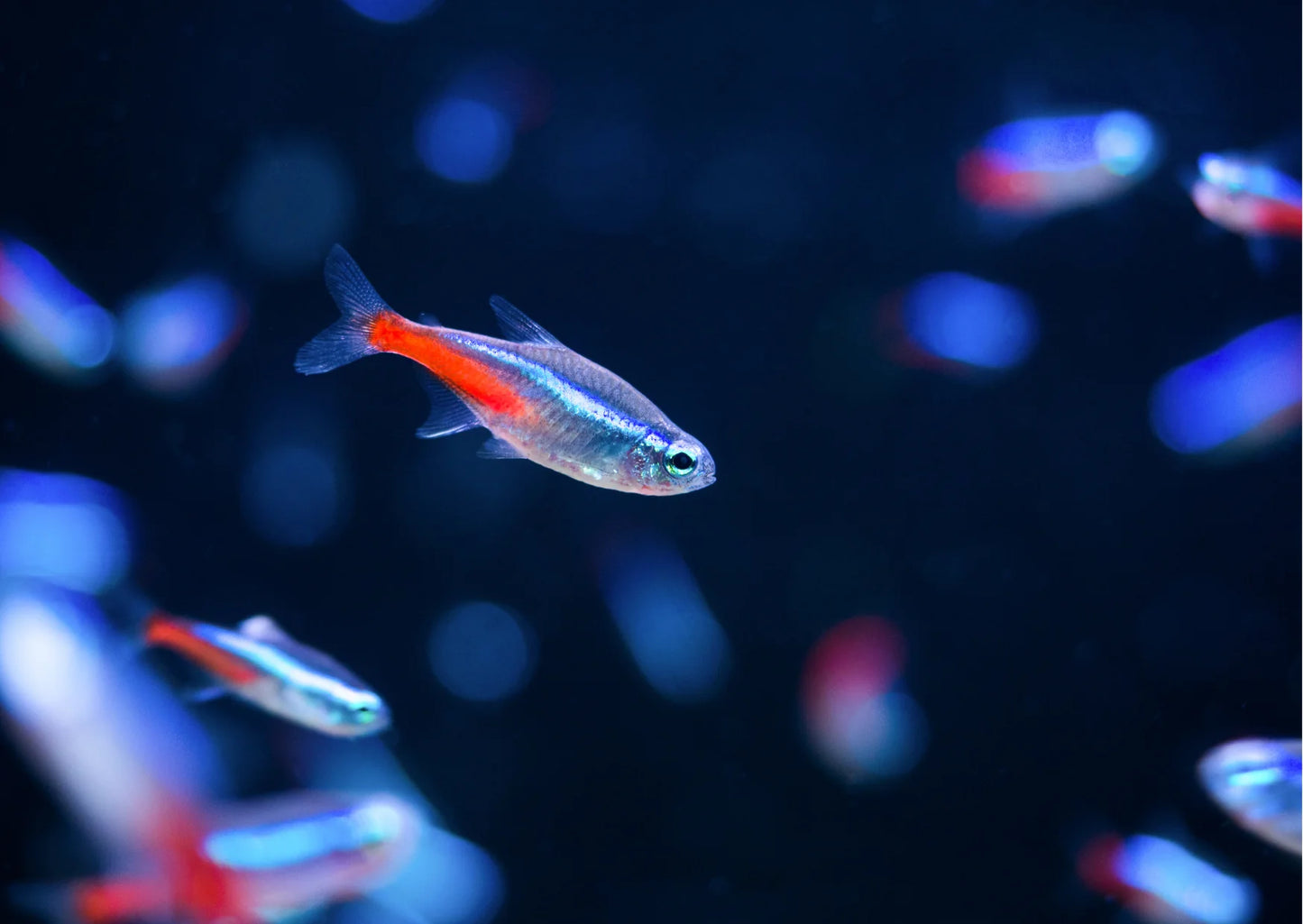
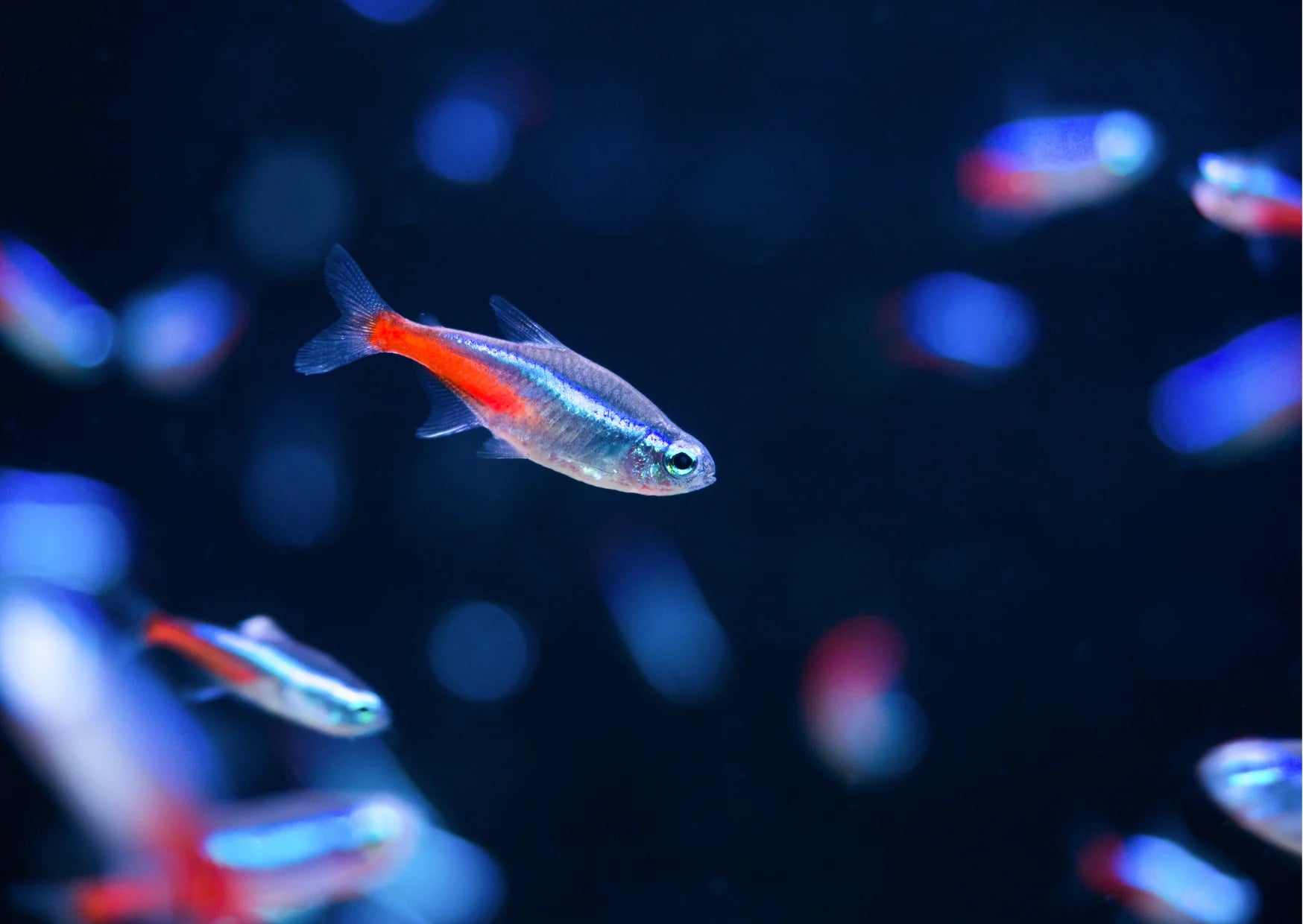
The fish that made people fall for aquariums. An iridescent blue stripe over a red lower half — simple, but in a school of twenty in a planted tank it has never been bettered. The Neon Tetra has been the definitive schooling fish for most of a century for good reason.
Neons are small, peaceful and beautiful, and most stock in the trade is farm-bred in very large numbers. They are not difficult, but they are less forgiving than their reputation suggests: most losses happen in new tanks or after rushed introductions. Get the tank mature and stable, and a school of neons will live for years.
Never add neons to a new tank.
This is where neons are lost. They are sensitive to ammonia, nitrite and unstable conditions. Add them only to a tank that has been running for at least two months, acclimatise slowly, and keep up regular water changes.
Care Snapshot
| Scientific name | Paracheirodon innesi |
| Also known as | Neon Tetra |
| Family | Characidae — American tetras |
| Origin | Tank-bred; native to the upper Amazon basin, Peru, Colombia and Brazil |
| Adult size | 3–4 cm |
| Lifespan | 5–8 years |
| Minimum tank | 60 litres, minimum 60 cm length for a group of 10+ |
| Temperature | 22–26 °C |
| pH | 6.0–7.5 |
| Hardness | 1–12 dGH |
| Diet | Omnivore — small dry, frozen and live foods |
| Temperament | Peaceful; schooling, keep 10+ |
| Care level | Easy to moderate |
| Swimming zone | Middle |
Setting Up For It
- Mature tank. At least two months running before adding neons.
- Dim, planted tank. Dark substrate and floating plants show off the stripe.
- Gentle flow. Sponge or baffled filters suit them.
- Slow acclimatisation. Drip-acclimatise over 30–45 minutes to avoid shock.
- Regular water changes. 25% weekly keeps conditions steady.
Tank Mates
Good matches
Cardinal, Ember, Lemon and Rummynose Tetras, Harlequin Rasbora, Corydoras, Otocinclus, Dwarf and Honey Gouramis, Bettas, Rams, Cherry and Amano shrimp.
Keep away from
Angelfish (adults will eat neons), large cichlids, Tiger Barbs and any fish big enough to swallow a 3 cm tetra.
Neons prefer slightly cooler water than cardinals; around 24–25 °C suits both.
Feeding — Small Foods, Little And Often
Neons have small mouths. Keep food particles small and avoid overfeeding.
Feed once or twice daily. From the AQA range, a micro granule or crushed flake works well as the staple, with frozen foods a few times a week.
Foods they relish: baby brine shrimp, daphnia, cyclops, chopped bloodworm.
Sexing & Breeding
Females are rounder, which causes the blue stripe to look slightly bent. Males are slimmer with a straighter stripe.
Breeding needs very soft, acidic water, darkness and a mop or fine moss. Eggs and fry are light-sensitive. Commercial stock is farm-bred in large numbers.
Keeping It In Indian Conditions
- Tank-bred stock is adaptable. Moderately hard municipal water works; borewell water benefits from RO blending.
- Summer is a risk. Neons prefer cooler water; above 28 °C stress and disease increase. Run fans and aeration in April–May.
- Winter heater. Keep 24–25 °C steady through cold nights.
- Monsoon: dechlorinate carefully and keep changes small during supply fluctuations.
What You Receive
Tank-bred juveniles and young adults, quarantined and conditioned at our Bengaluru facility before dispatch. Sex is not guaranteed. Colour looks faded after travel and returns within days. Acclimatise slowly. Packed with oxygen and insulation for pan-India delivery.
Covered by the Best4Pets live arrival guarantee. Please film an unboxing video before opening the bag — it is required for any DOA claim.