- Product
- Red tail catfish 2.5-3"

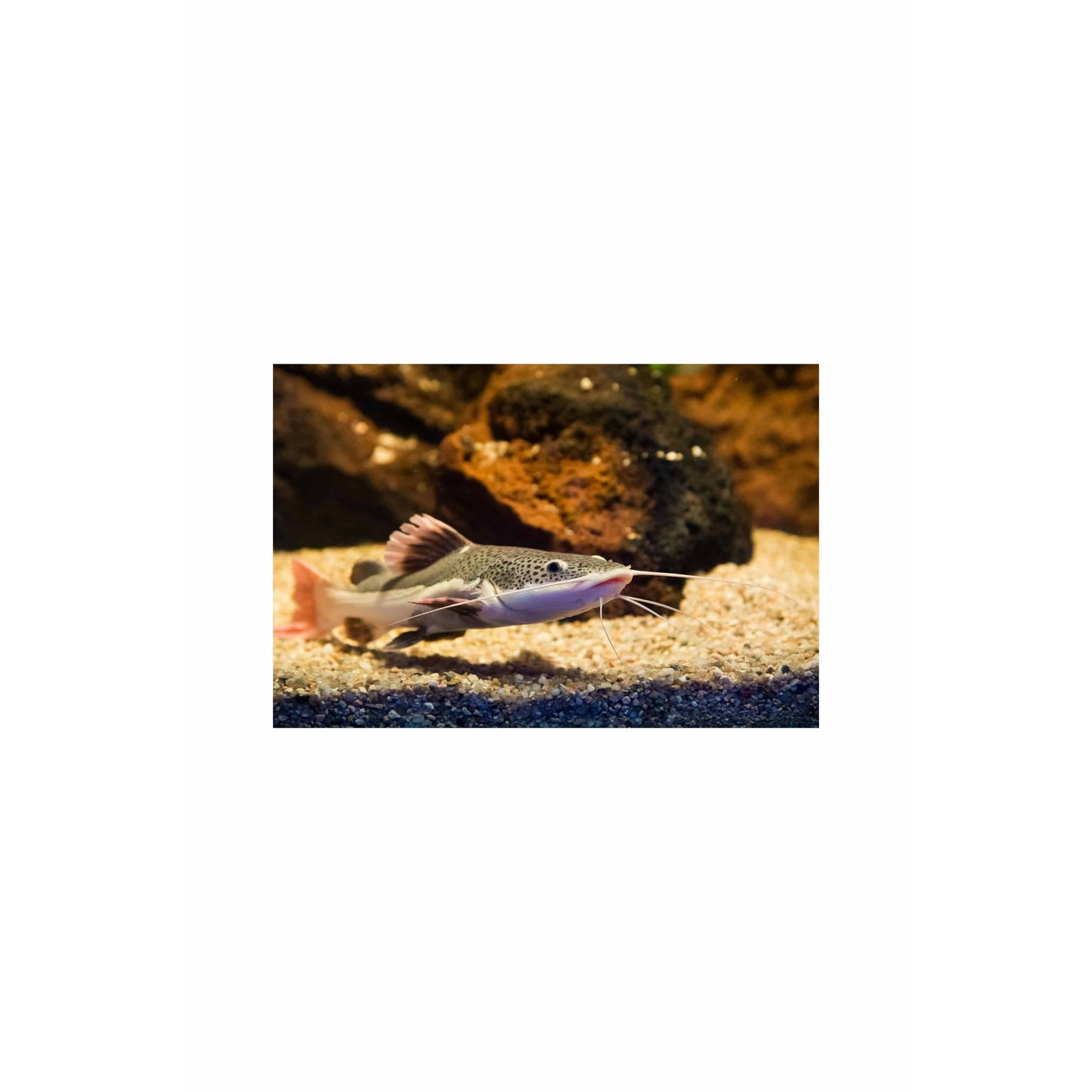
Red Tail Catfish 2.5-3"
Couldn't load pickup availability
Cute at 7 cm. A metre long and 40 kg later, it is not. The Redtail Catfish is sold as a striking little fish with a black-and-white body and a bright red tail. It is also one of the largest catfish in South America, reaching a metre or more and the weight of a small child. It grows fast, eats constantly and outgrows every home aquarium ever sold in India.
We are honest about this fish because so many end up abandoned or dying in tanks far too small. It is a genuine giant, intelligent and long-lived, and it belongs in public aquaria, large indoor ponds or purpose-built systems of several thousand litres. If you do not already have — or will not build — a system like that, please do not buy one. If you do, it is one of the most impressive and personable fish you can keep.
Not suitable for home aquariums. It reaches a metre or more.
A redtail can grow 30 cm in its first year and keeps going. An adult needs a pond-scale system of 10,000 litres or more, with heavy-duty filtration. No standard aquarium is big enough, and public aquaria and zoos rarely accept unwanted adults. Buy only if you have that space planned now.
Care Snapshot
| Scientific name | Phractocephalus hemioliopterus |
| Also known as | Redtail Cat, RTC, Pirarara |
| Family | Pimelodidae — long-whiskered catfishes |
| Origin | Amazon and Orinoco basins — Brazil, Colombia, Peru, Venezuela, Bolivia |
| Adult size | 80–135 cm; commonly 1 m in large systems |
| Arrival size | 2.5–3 inch |
| Lifespan | 15–20+ years |
| Minimum tank | Not a home-aquarium fish — adults need 10,000+ litres |
| Temperature | 22–28 °C |
| pH | 6.0–7.5 |
| Hardness | 4–15 dGH |
| Diet | Predatory omnivore — eats almost anything |
| Temperament | Peaceful to fish too large to swallow; eats everything else |
| Care level | Expert — space and filtration on an industrial scale |
| Swimming zone | Bottom |
Setting Up For It
- Plan the final enclosure before you buy. A juvenile can live in a 500-litre tank for a few months at most. Have the large system ready or under construction.
- Massive filtration. A redtail eats heavily and produces enormous amounts of waste. Plan for sumps, external drum filters or pond-grade biological filtration.
- Bare or sand floor, no loose decor. Adults rearrange or swallow loose stones and gravel. Use sand or a bare base and heavy, fixed decor only.
- Secure equipment. Heaters, pipes and glass are all at risk from a fish this powerful. Shield everything.
- Weekly large water changes. Even with big filtration, nitrate builds fast. Change a large share of water every week.
Tank Mates
Good matches
Only very large, robust fish that cannot be swallowed: big arowanas, large pacu, adult tiger shovelnose, large cichlids of comparable size — and only in a pond-scale system.
Keep away from
Anything smaller than about half its length, which will be eaten. Other redtails, which may fight. Delicate fish of any size.
Redtails have swallowed tank mates nearly their own size. Expect anything small to go.
Feeding — The Danger Is Overfeeding
Redtails will eat until they are stuffed and beg for more. Overfeeding causes fatty liver disease, bloating and dangerous waste levels. Feed juveniles every day or two and adults only two or three times a week.
From the AQA range, large sinking carnivore pellets make a good staple for juveniles. Add whole prawn, fish fillet and mussel. Avoid feeding live feeder fish, which carry disease and encourage bad habits.
Foods they take: large sinking pellets, prawn, fish fillet, mussel, earthworm.
Sexing & Breeding
Sexing is not possible from external features in aquarium-sized fish.
Redtails have not been bred in home aquaria. Commercial juveniles are produced on large farms using hormone induction. Treat this fish as a lifelong commitment, not a breeding project.
Keeping It In Indian Conditions
- Do not release it. Never let an outgrown redtail go into a lake, tank or river. Exotic predatory catfish turned loose in Indian waters have already done lasting damage to native fish, and this one would eat its way through a local pond.
- Power cuts are critical. Large fish in big systems need constant oxygen. A generator or inverter-backed air supply is essential.
- Indian summer heat is within its range, but large volumes of warm water hold less oxygen. Aerate heavily.
What You Receive
One juvenile, supplied at 2.5–3 inch, quarantined and conditioned at our Bengaluru facility before dispatch. Sex cannot be determined. Please read the size warning above before ordering. Packed with oxygen and insulation for pan-India delivery.
Covered by the Best4Pets live arrival guarantee. Please film an unboxing video before opening the bag — it is required for any DOA claim.