- Product
- Madagascar rainbowfish 2 inch

Madagascar Rainbowfish 2 inch
Couldn't load pickup availability
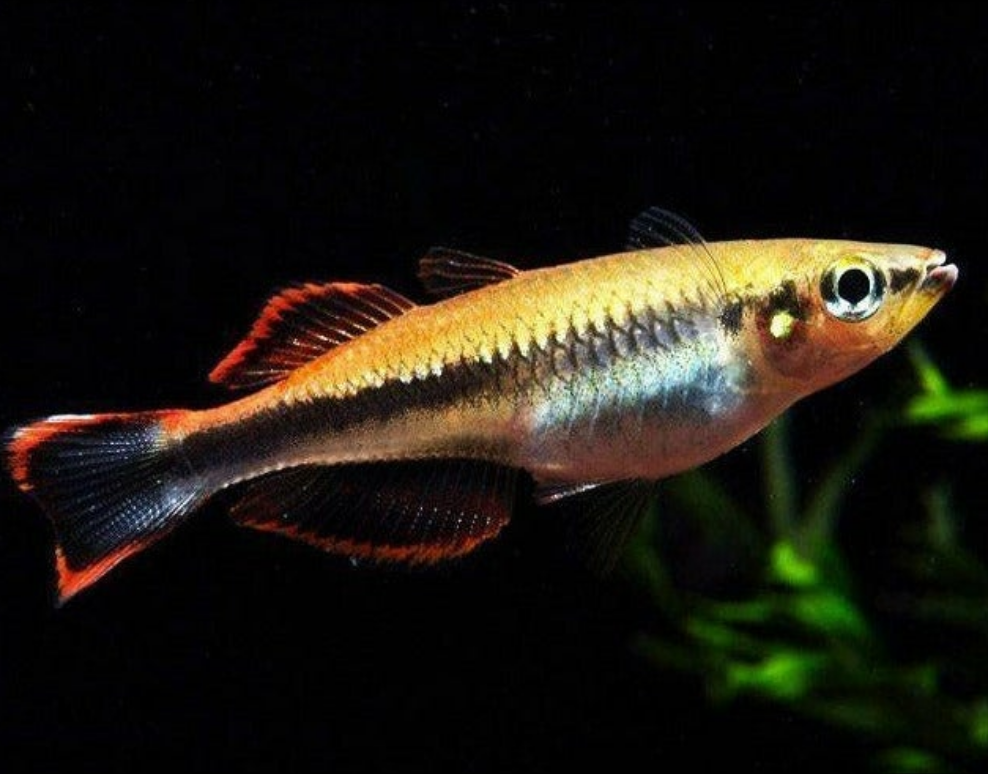
Red-edged fins on a fish few people have seen. Males carry a bold black stripe and fins edged in red and black, which they flare constantly at each other. It looks like no other rainbowfish — and it comes from an island where native freshwater fish are under severe threat, which makes aquarium populations matter.
The Madagascar Rainbowfish is a medium-sized, active, peaceful schooling fish. It is hardy, adaptable and long-lived, and a group of males and females in a long planted tank is an impressive display. It suits keepers who want an active upper-water shoal for a medium to large community tank.
Give them length. These fish need swimming space.
Madagascar Rainbowfish are fast, continuous swimmers. A tank under 90 cm long cramps them, and cramped fish stay pale and nervous. A long tank with an open middle is the single best investment for this species.
Care Snapshot
| Scientific name | Bedotia madagascariensis |
| Also known as | Madagascar Rainbowfish, Red-tailed Silverside |
| Family | Bedotiidae — Madagascar rainbowfishes |
| Origin | Native to eastern Madagascar |
| Adult size | 8–10 cm |
| Arrival size | about 2 inch |
| Lifespan | 4–6 years |
| Minimum tank | 150 litres, minimum 90–120 cm length for a group of 6+ |
| Temperature | 22–26 °C |
| pH | 6.5–8.0 |
| Hardness | 5–15 dGH |
| Diet | Omnivore — dry, frozen and live foods |
| Temperament | Peaceful and active; shoaling, keep 6+ |
| Care level | Easy to moderate |
| Swimming zone | Upper and middle |
Setting Up For It
- Long tank, open water. A clear swimming lane through the middle and upper water.
- Moderate flow. They enjoy a gentle current along the tank.
- Planted edges. Hardy plants around the back and sides give shelter.
- Tight lid. Active surface swimmers can jump.
- Clean, oxygen-rich water. Good filtration and weekly water changes keep them at their best.
Tank Mates
Good matches
Other rainbowfish, Danios, Barbs, Larger Tetras, Corydoras, Plecos, Gouramis, Loaches.
Keep away from
Large aggressive cichlids and very small nano fish that could be out-competed.
Keep both sexes; males display to females and to each other and colour is best in mixed groups.
Feeding — Varied Diet For Colour
They are not fussy and take food from the surface and mid-water.
Feed once or twice daily. From the AQA range, a quality community granule or flake makes a good staple, with frozen foods several times a week.
Foods they relish: frozen bloodworm, brine shrimp, mosquito larvae, daphnia.
Sexing & Breeding
Males have stronger fin colour with red and black edges and longer fins. Females are paler with less fin colour.
They spawn among fine-leaved plants or a mop over several days, a few eggs at a time. Eggs can be collected and hatched separately; fry take infusoria and then baby brine shrimp.
Keeping It In Indian Conditions
- Hard water is fine. They prefer neutral to slightly alkaline water, so typical Indian tap water suits them.
- Summer is the challenge. They prefer under 26 °C. In April–May, maximise aeration, run fans and shade the tank.
- Heater often unnecessary. Across most of India room temperature suits them except in cold northern winters.
- Power cuts: a battery-backed air pump protects oxygen in a busy tank during summer outages.
What You Receive
Juveniles and young adults, supplied at about 2 inch, quarantined and conditioned at our Bengaluru facility before dispatch. Sex is not guaranteed; male fin colour develops with maturity. Colour looks pale after travel and returns once settled. Packed with oxygen and insulation for pan-India delivery.
Covered by the Best4Pets live arrival guarantee. Please film an unboxing video before opening the bag — it is required for any DOA claim.