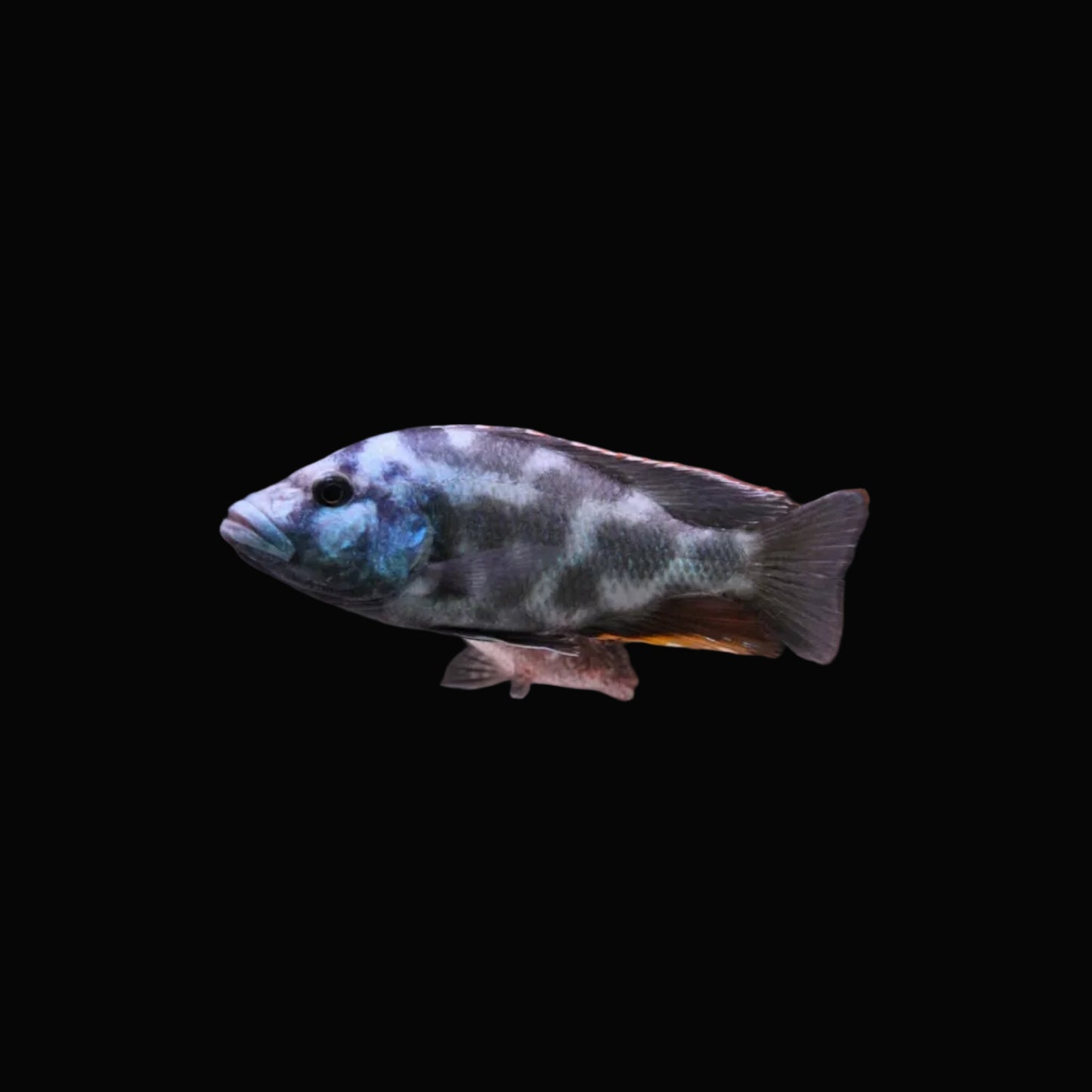
Livingstonii Cichlid Import 4-4.5"
Couldn't load pickup availability
It plays dead to catch its dinner. In Lake Malawi, Livingston's Cichlid lies on its side on the sand, still and blotched like a rotting carcass, until a curious small fish comes close enough to swallow. It is one of the most famous hunting tricks in the fish world, and you will see it in the aquarium too.
The blotched brown-and-white pattern that makes the trick work is the colour of juveniles and females; mature males develop a blue sheen over the face and body during breeding. This is a large, deep-bodied predator that grows to around 20–25 cm, and it needs a big tank of similarly sized haps. It is not a beginner's cichlid, but it is one of the most characterful fish in the lake.
Plan for a 25 cm predator before you buy.
Livingstonii grow fast and eat anything that fits in their large mouths. They need a tank of at least 180 cm and 450 litres, shared with other large haps. Keep that tank in mind before buying the juvenile in the bag.
Care Snapshot
| Scientific name | Nimbochromis livingstonii |
| Also known as | Livingston's Cichlid, Livingstoni, Sleeper; formerly Haplochromis livingstonii |
| Family | Cichlidae — Lake Malawi haplochromines (haps) |
| Origin | Farm-bred; the wild species lives in sandy and vegetated inshore areas of Lake Malawi |
| Adult size | 20–25 cm (males larger) |
| Arrival size | 4–4.5 inch |
| Lifespan | 10–15 years |
| Minimum tank | 450 litres, minimum 180 cm length |
| Temperature | 24–28 °C |
| pH | 7.6–8.6 |
| Hardness | 8–20 dGH — hard and alkaline |
| Diet | Carnivore — ambush predator |
| Temperament | Moderately aggressive; predatory to small fish |
| Care level | Moderate — mainly a question of tank size |
| Swimming zone | Lower and middle |
Setting Up For It
- 180 cm tank minimum. A large-bodied predator needs length and floor area more than height.
- Open sand floor. Fine sand where it can lie and hunt; keep rock to the back and ends.
- Heavy filtration. A big meat-eater produces a lot of waste. Turnover of five to eight times per hour and 30–40% weekly water changes.
- Stable, heavy rock. Large cichlids dig and push; set rock on the base glass.
- Tight lid. Large haps jump when frightened.
- One male, several females. Or a single male in a large all-male hap display.
Tank Mates
Good matches
Large haps of similar size: Venustus, Fossorochromis, Buccochromis, large Blue Dolphin, Malawi Eye Biter, Electric Blue Ahli, large peacocks and large synodontis catfish.
Keep away from
Any fish small enough to swallow — mbuna, small peacocks, juveniles — as well as aggressive mbuna, community fish and shrimp. Venustus females, which can hybridise with Livingstonii.
Buy tank mates at similar size and grow them up together.
Feeding — Meaty, Varied, Not Live
Livingstonii are fish-eaters, but feeding live feeder fish is a fast way to bring disease into the tank. Most farm-bred fish take prepared food readily.
Feed once a day, or twice for growing juveniles. From the AQA range, a large sinking cichlid pellet as the staple, with frozen mysis, krill, prawn and fish fillet two or three times a week. Avoid fatty mammalian meat.
Foods it takes eagerly: cichlid pellets, frozen krill, mysis, chopped prawn, fish fillet, and a little spirulina.
Sexing & Breeding
Males grow larger and develop a blue sheen over the face and body, especially when breeding. Females keep the brown and white blotched pattern. Juveniles look identical and cannot be reliably sexed.
A maternal mouthbrooder producing large broods. The female holds the eggs and fry for around three weeks. Fry are robust and grow quickly on baby brine shrimp and crushed flake.
Keeping It In Indian Conditions
- Hard alkaline water is on your side. Borewell and much southern municipal water is already hard and alkaline — exactly what Malawi cichlids need. Dechlorinate, match the temperature and use it without softening.
- Summer heat means oxygen. Above about 29 °C, a tank of large cichlids starts to run short. Through April and May add an air stone, run a fan across the surface and feed lighter.
- Back up the filter. Large Malawi fish in a stocked tank can be in trouble within an hour of a power cut. A battery air pump or inverter line for the filter is the cheapest insurance you will buy.
- Big fish, big tank, big backup. A 450-litre tank of large predators uses oxygen quickly. Inverter backup for the filter is worth planning before the fish arrive.
What You Receive
Farm-bred juveniles and young adults, supplied at 4–4.5 inch, quarantined and conditioned at our Bengaluru facility before dispatch. Sex cannot be guaranteed — juveniles of both sexes share the same blotched pattern. Fish may look pale on arrival. Packed with oxygen and insulation for pan-India delivery.
Covered by the Best4Pets live arrival guarantee. Please film an unboxing video before opening the bag — it is required for any DOA claim.