- Product
- Harlequin rasbora (pair)


Harlequin Rasbora (Pair)
Couldn't load pickup availability
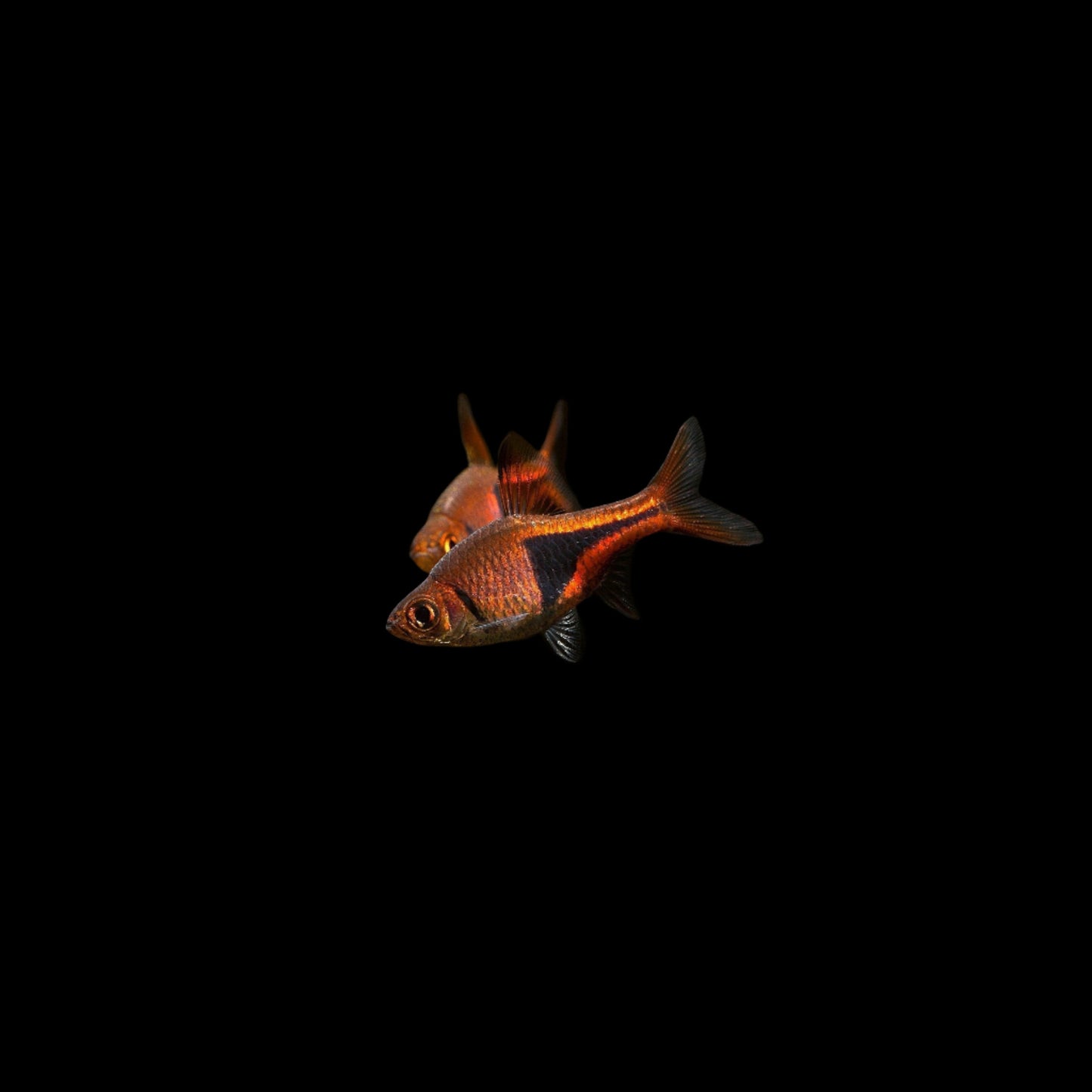
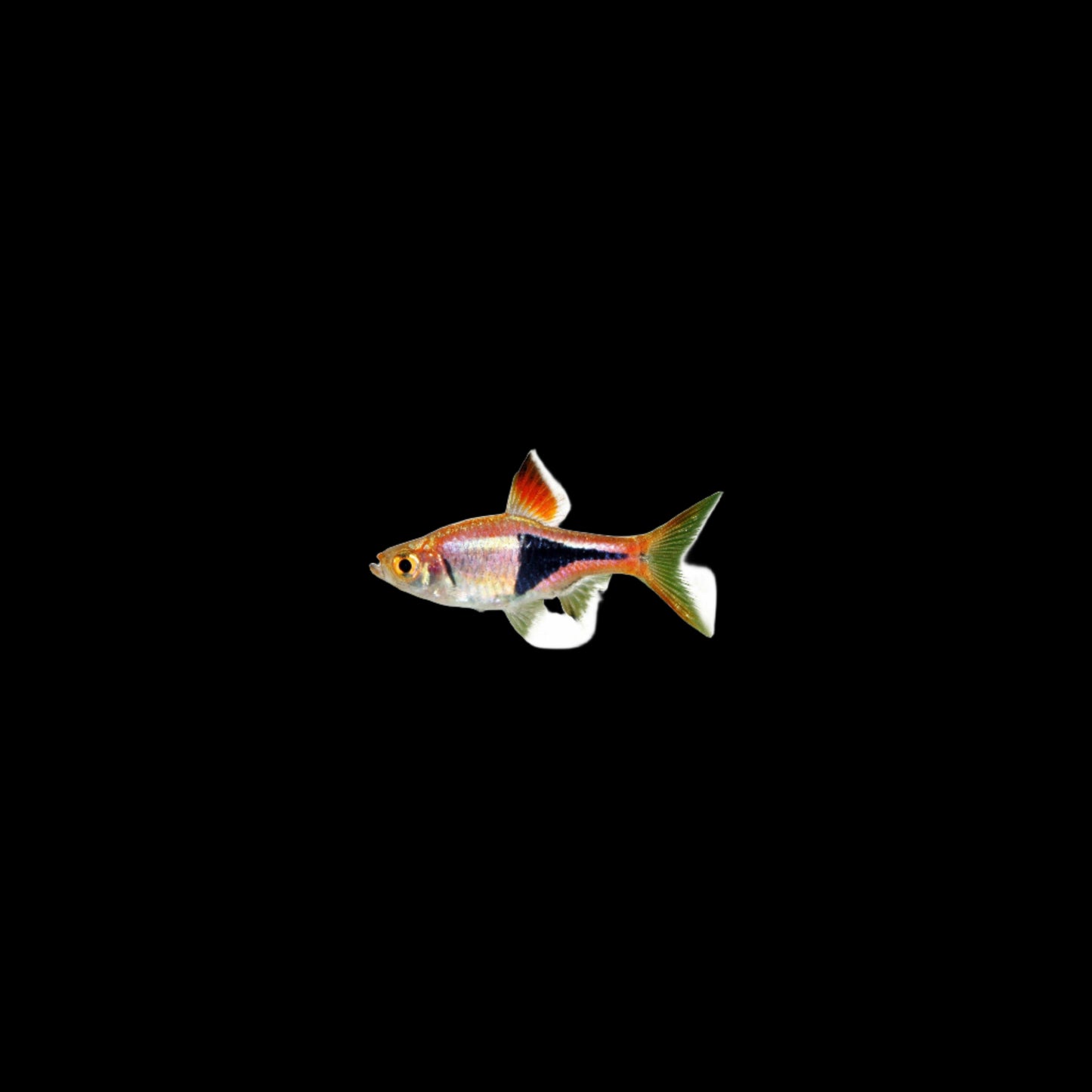
Copper body, black wedge, and a school that turns as one. The deep copper-orange body is cut by a sharp black triangle at the rear — a marking so clean it looks painted on. In a group of ten or more, harlequins school tightly and turn together, and the wedges flash in sync.
This is one of the classic schooling fish, and one of the easiest to recommend. Harlequins are peaceful, hardy, long-lived and far more tolerant of varying water than their soft-water origins suggest. They settle into almost any calm community tank and look best in a planted setup with enough open water for the school to show its movement.
Ten fish, not three.
Harlequins kept in small numbers stay pale and nervous. In a proper school, they colour up, stay in the open and behave naturally. Buying ten instead of three changes the whole effect — and still costs less than a single centrepiece fish.
Care Snapshot
| Scientific name | Trigonostigma heteromorpha |
| Also known as | Harlequin Rasbora, Red Rasbora; formerly Rasbora heteromorpha |
| Family | Cyprinidae — rasboras and danios |
| Origin | Native to peat swamps and streams of Thailand, Malaysia, Singapore and Sumatra |
| Adult size | 4–5 cm |
| Lifespan | 5–8 years |
| Minimum tank | 60 litres, minimum 60 cm length for a group of 10 |
| Temperature | 23–28 °C |
| pH | 6.0–7.5 |
| Hardness | 2–15 dGH |
| Diet | Omnivore — small dry, frozen and live foods |
| Temperament | Peaceful; schooling, keep 10+ |
| Care level | Easy |
| Swimming zone | Middle |
Setting Up For It
- Planted, with open space. Broad-leaved plants such as crypts give cover; leave a clear middle for the school.
- Soft light and dark substrate. The copper colour is much richer in a dim tank with tannins.
- Gentle flow. They come from still and slow waters.
- Driftwood and catappa leaves. Mimic the peat-swamp conditions and deepen colour.
- Weekly water changes of 25%. Consistent maintenance keeps them colourful for years.
Tank Mates
Good matches
Neon, Cardinal, Ember and Lemon Tetras, Chili Rasbora, Dwarf and Honey Gouramis, Corydoras, Kuhli Loaches, Otocinclus, Bettas, Cherry and Amano shrimp.
Keep away from
Large cichlids, aggressive barbs and any fish big enough to eat them.
One of the best companions for a betta, as they are calm and do not nip fins.
Feeding — Easy Feeders
Harlequins accept most foods readily but have small mouths, so keep the size of granules and flakes modest.
Feed once or twice daily. From the AQA range, a small-grade granule or flake is a good staple, with frozen foods several times a week.
Foods they relish: frozen bloodworm, brine shrimp, daphnia, cyclops, mosquito larvae.
Sexing & Breeding
Males are slimmer, and the front edge of the black wedge is sharper and extends lower toward the belly. Females are rounder and the wedge's lower edge is straighter.
Unusually for small cyprinids, harlequins lay their eggs on the underside of broad leaves rather than scattering them. Breeding needs soft, acidic water and a plant such as a cryptocoryne. Remove the adults after spawning.
Keeping It In Indian Conditions
- Tolerant of Indian tap water. Moderately hard municipal water is fine; very hard borewell water benefits from RO blending.
- Summer peak: above 29 °C, increase aeration, shade the tank and feed lightly during April–May.
- Winter heater. Keep 25–26 °C overnight in Bengaluru and colder regions.
- Monsoon: dechlorinate and temperature-match every change, keeping volumes small while supply quality fluctuates.
What You Receive
Juveniles and young adults, quarantined and conditioned at our Bengaluru facility before dispatch. Sex is not guaranteed. Colour looks paler after travel and deepens as the fish settle. Packed with oxygen and insulation for pan-India delivery.
Covered by the Best4Pets live arrival guarantee. Please film an unboxing video before opening the bag — it is required for any DOA claim.