- Product
- Gangetic leaf fish 2.75-3inch

Gangetic Leaf fish 2.75-3inch
Couldn't load pickup availability
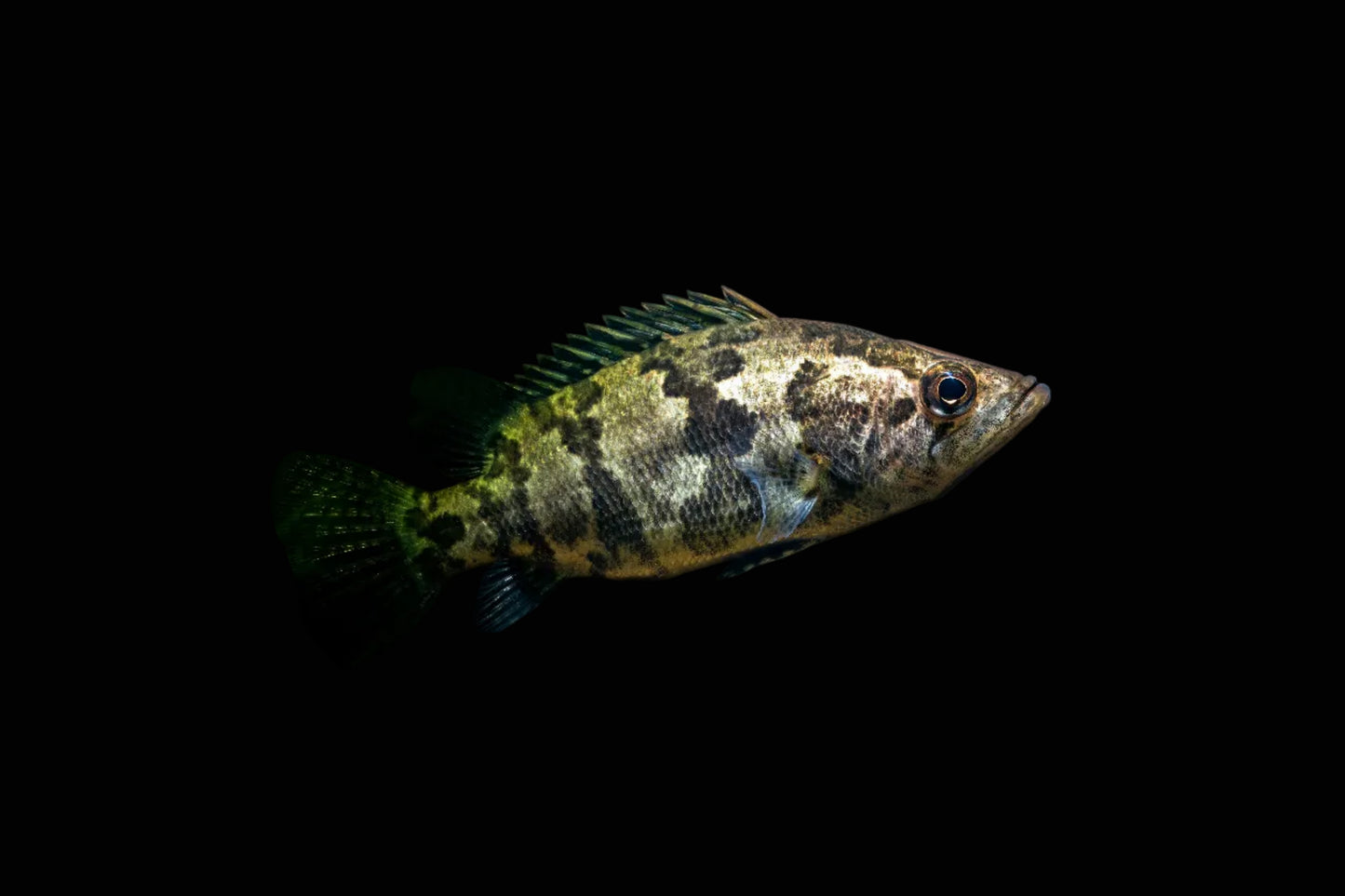
A hunter disguised as a drifting leaf. Mottled brown and olive, with a deep, flattened body, the Gangetic Leaf Fish hangs head-down among roots and plants, tilting slowly as though it were a dead leaf in the current. Then a small fish drifts too close, the protrusible mouth shoots forward, and the fish is gone. Watching it hunt is the whole point of keeping one.
This is a native Indian micro-predator from slow rivers, ponds, canals and floodplains across the Ganges basin and much of South Asia, including slightly brackish coastal waters. It is calm and slow-moving, mostly ignoring anything it cannot swallow, but it is a committed predator, and its mouth is larger than it looks. Kept in a quiet, planted tank with suitable company, it is hardy and endlessly watchable.
It eats small fish. Build the tank around that.
Any fish that can fit in a Leaf Fish's mouth — which extends to almost half its own length — will be eaten. Keep it alone, in a small group of its own kind, or with robust fish clearly too large to swallow. Get that decision right and everything else is simple.
Care Snapshot
| Scientific name | Nandus nandus |
| Also known as | Gangetic Leaf Fish, Asian Leaf Fish, Mottled Nandus |
| Family | Nandidae — Asian leaffishes |
| Origin | India, Bangladesh, Nepal and neighbouring South Asia — Ganges and Brahmaputra basins |
| Adult size | 15–20 cm |
| Arrival size | 2.75–3 inch |
| Lifespan | 5–8 years |
| Minimum tank | 120 litres, minimum 90 cm length |
| Temperature | 22–28 °C |
| pH | 6.5–7.8 |
| Hardness | 4–15 dGH |
| Diet | Predator — live and meaty frozen foods |
| Temperament | Calm, but predatory toward smaller fish |
| Care level | Moderate — easy once feeding is established |
| Swimming zone | Middle and lower |
Setting Up For It
- Planting and roots. Dense vegetation, driftwood and tangles of roots give it ambush points and security. A Leaf Fish in a bare tank stays stressed and pale.
- Subdued lighting. Floating plants or low light make it bolder and more natural.
- Gentle flow. Slow-water fish. Avoid strong currents; a diffused outlet or sponge filter is best.
- Good filtration. Meaty diets produce a lot of waste. A well-sized filter and weekly water changes are essential.
- Lid. Startled fish can jump.
Tank Mates
Good matches
Robust, peaceful fish too large to swallow: larger gouramis, Filament or Denison Barbs, larger loaches, medium-to-large catfish, other leaf fish of similar size.
Keep away from
Small fish and shrimp of any kind, and fast, aggressive species that out-compete it or nip its fins.
Several can be kept together in a well-planted tank if they are similar in size.
Feeding — Live Food First, Frozen Next
In the wild it eats small fish, insects and crustaceans. New arrivals often take only live food; most can be weaned gradually onto frozen bloodworm, mysis and prawn pieces offered on tongs or dropped in front of them.
Some individuals eventually accept a sinking pellet, such as a carnivore pellet from the AQA range, mixed with frozen food — treat that as a bonus rather than the staple.
Foods it takes: live earthworms, mosquito larvae, river shrimp, frozen bloodworm, mysis, chopped prawn.
Sexing & Breeding
Sexing is difficult; females may be slightly fuller-bodied when carrying eggs. There are no reliable external differences in young fish.
Spawning in captivity is rare. In the wild it is thought to breed during the monsoon season among submerged vegetation, with eggs scattered and receiving little parental care. A seasonal cooling and increase in water changes may encourage spawning.
Keeping It In Indian Conditions
- A native of Indian rivers and floodplains, breeding in the wild as monsoon waters spread across low-lying land. It is used to warm, variable conditions and handles Indian climates well.
- Summer heat: comfortable up to 28 °C; above that, increase aeration and use a fan.
- Winter: in Bengaluru and northern cities, a heater set around 24–25 °C keeps it active and feeding.
- Local water suits it. Moderately hard, neutral municipal water is fine. It tolerates a little salt, so a small amount of aquarium salt during quarantine is not harmful.
What You Receive
One fish, supplied at 2.75–3 inch, quarantined and conditioned at our Bengaluru facility before dispatch. Sex cannot be determined at this size. Colours and markings intensify once settled in a planted tank. Packed with oxygen and insulation for pan-India delivery.
Covered by the Best4Pets live arrival guarantee. Please film an unboxing video before opening the bag — it is required for any DOA claim.