- Product
- Neon blue acara 4inch (pair)


Neon Blue Acara 4inch (Pair)
Couldn't load pickup availability
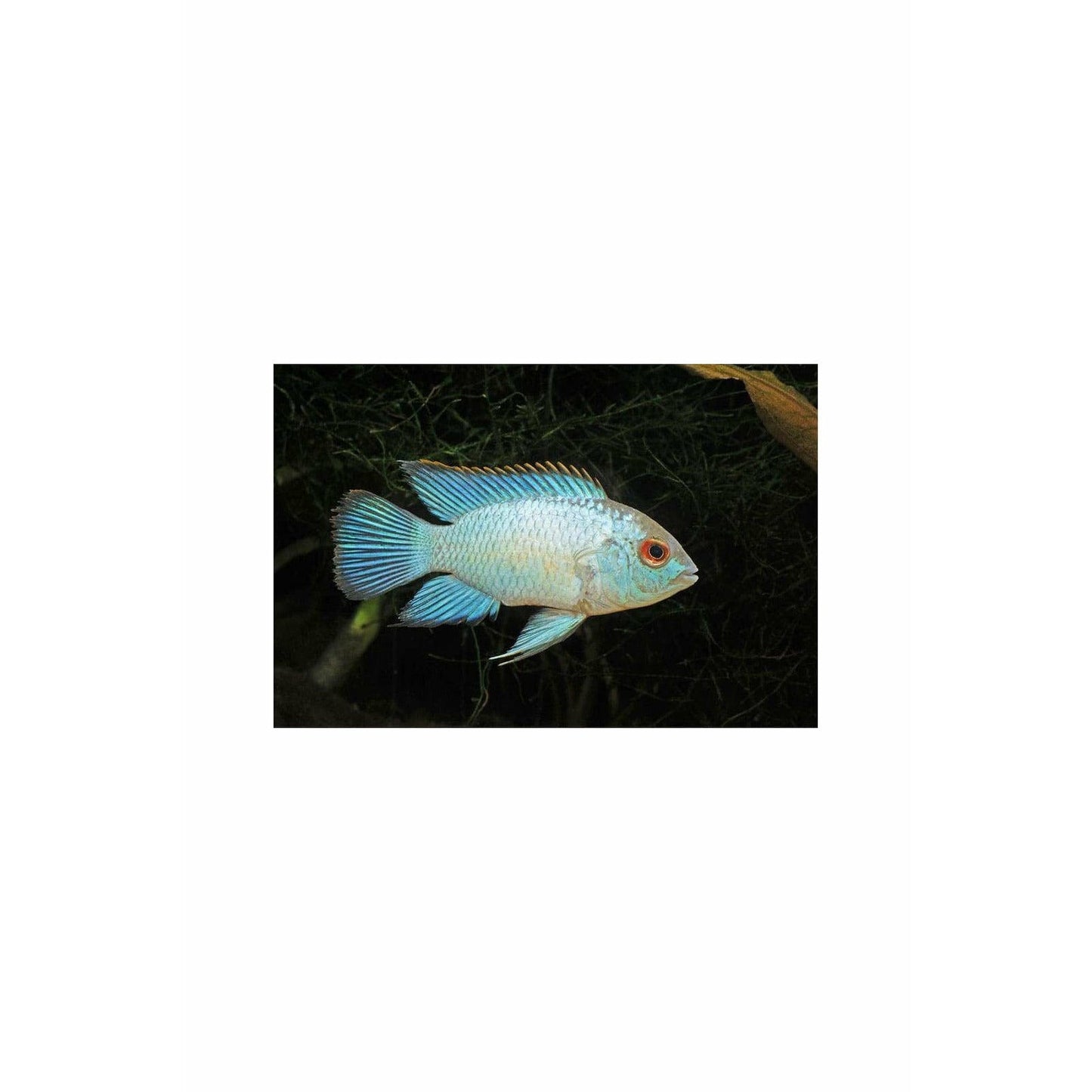
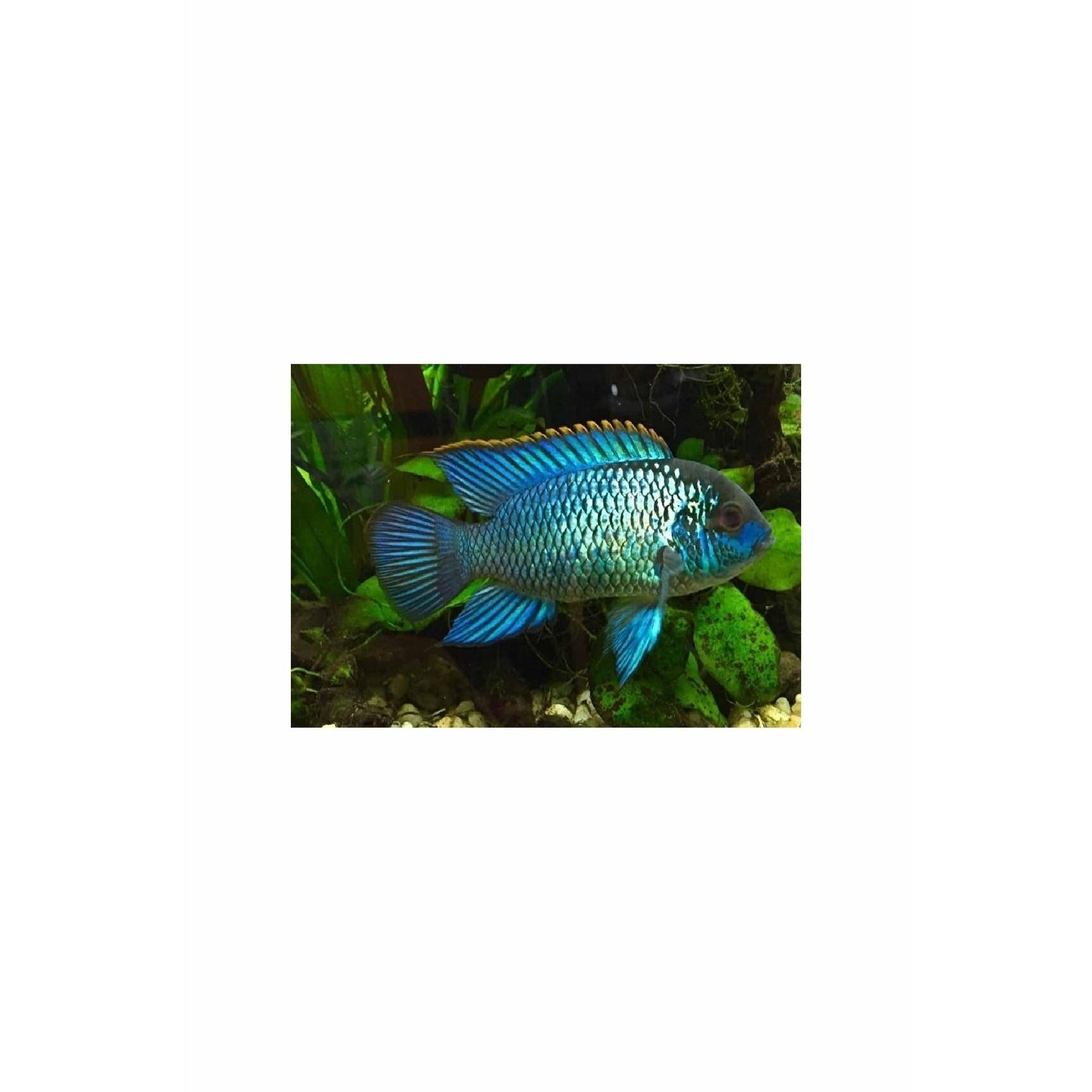
A proper cichlid that behaves itself. The Blue Acara has been in the hobby for over a century for good reason: a sturdy, intelligent, family-raising cichlid that stays a manageable size and rarely turns into a bully. The well-coloured stock sold as Neon Blue Acara carries iridescent blue scaling across the body and electric blue lines across the cheeks, sharpening further when the fish are settled and breeding.
It is the classic first big-cichlid experience in a medium tank. A pair will dig a little, claim a flat stone, spawn and lead a cloud of fry around the tank in plain view — the whole cichlid story without the 30 cm adult or the wrecked tank. The name "neon" is a trade description of well-coloured stock rather than a separate species or a hybrid, and colour depends heavily on mood, diet and lighting.
Mostly peaceful — until it has fry.
Outside breeding, a Blue Acara is one of the calmest cichlids of its size. Once a pair spawns, it will defend its patch firmly and anything small enough to swallow becomes food. Plan tank mates that are too big to eat and robust enough to get out of the way, and it will be a well-mannered fish for years.
Care Snapshot
| Scientific name | Andinoacara pulcher |
| Also known as | Blue Acara, Neon Blue Acara; formerly Aequidens pulcher |
| Family | Cichlidae — South American acara-type cichlids |
| Origin | Tank-bred; wild form native to Trinidad, Venezuela and northern Colombia |
| Adult size | 12–16 cm (males larger) |
| Arrival size | about 4 inch |
| Lifespan | 8–10 years |
| Minimum tank | 150 litres for a pair, minimum 90–100 cm length |
| Temperature | 22–28 °C |
| pH | 6.5–8.0 |
| Hardness | 4–18 dGH — adaptable |
| Diet | Omnivore — sinking pellets with meaty extras |
| Temperament | Fairly peaceful for a cichlid; territorial when breeding |
| Care level | Easy — hardy and forgiving |
| Swimming zone | Bottom and middle |
Setting Up For It
- Sand or smooth fine gravel. Acaras pick and sift through the substrate and dig shallow pits before spawning.
- A few flat stones. A pair spawns on a cleaned flat surface. Give them one or two smooth stones or slate pieces set firmly on the glass.
- Wood and cover. Driftwood, caves and dense groups of hardy plants give the pair a home base and give tank mates a way to retreat.
- Hardy plants survive. Acaras are moderate diggers. Anubias, Java fern, Cryptocoryne and potted swords generally hold out.
- Good filtration, moderate flow. A canister or a large hang-on filter plus 25–30% weekly water changes keeps nitrate low, which keeps colour high.
- Dark substrate, warm lighting. The blue shows far more strongly over a dark floor than over pale sand.
Tank Mates
Good matches
Severums, Firemouth, Keyhole Cichlid, Angelfish in larger tanks, Silver Dollars, large tetras such as Congo Tetra, Giant Danios, Bristlenose Pleco, larger Corydoras, Synodontis. Fish of similar size that are calm but not timid.
Keep away from
Neon tetras, small rasboras, guppies and shrimp — adult acaras eat them. Large aggressive cichlids such as Green Terror, Jaguar or Red Devil, which will dominate this calmer fish. Long-finned, slow fish during breeding periods.
Two pairs can share a tank of 300 litres or more if the floor is divided with rock and wood.
Feeding — Easy To Feed, Easy To Overfeed
Blue Acaras accept almost anything and quickly learn to beg. Keep portions sensible — what is eaten in two minutes, twice a day — because overfed cichlids in warm water foul the tank and lose colour.
From the AQA range, a small to medium sinking cichlid pellet makes a good daily staple, supported by frozen foods several times a week. A varied, carotenoid-rich diet helps the blue scaling and yellow-orange fin edges develop fully.
Foods it takes eagerly: frozen bloodworm, brine shrimp, mysis, daphnia, chopped prawn, and blanched spinach or peas now and then.
Sexing & Breeding
Males grow larger, with longer, more pointed dorsal and anal fins and usually more intense blue on the face. Females are smaller and rounder, often with a darker, more banded pattern when ready to spawn. Juveniles at 5 cm and under cannot be reliably sexed.
This is one of the easiest cichlids to breed. A bonded pair cleans a flat stone, lays a few hundred eggs and guards them; both parents tend the fry, moving them between pits until they swim freely. First spawns are sometimes eaten — most pairs get it right within a few attempts. Fry take baby brine shrimp and crushed flake from free-swimming.
Keeping It In Indian Conditions
- Indian room temperatures suit it well. This is a hardy fish that is comfortable from 22 to 28 °C. In southern India a heater is a safety net; in Bengaluru and northern winters set one to 25 °C.
- Hard water is fine. Tank-bred Blue Acaras handle most municipal and borewell water without trouble. Very hard water may slightly dull the blue, which is easily improved with driftwood and a share of softer water.
- Summer heat needs air. Above about 30 °C, add an air stone and run a fan across the surface during April and May heatwaves.
- Food is easy to find. Sinking cichlid pellets and frozen bloodworm are available in most Indian cities, so this is one of the simplest cichlids to keep well-fed.
What You Receive
Tank-bred juveniles and young adults, supplied at about 4 inch, quarantined and conditioned at our Bengaluru facility before dispatch. Sex cannot be confirmed at smaller sizes, so pair listings are two unsexed fish unless stated otherwise. Young fish often look grey-blue in the bag; the full iridescent blue develops over weeks once they are settled, well-fed and kept over a darker substrate. Packed with oxygen and insulation for pan-India delivery.
Covered by the Best4Pets live arrival guarantee. Please film an unboxing video before opening the bag — it is required for any DOA claim.