- Product
- Ceratopteris thalictroides china

Ceratopteris thalictroides China
Couldn't load pickup availability
This one is actually from here. Ceratopteris thalictroides is native to India — it grows in paddy margins, ditches and slow shallow water across much of the subcontinent and tropical Asia, and has done long before anyone put it in a glass box. Most of what gets sold as a "beginner plant" is a South American or cultivated import fighting your tap water. This one evolved in it.
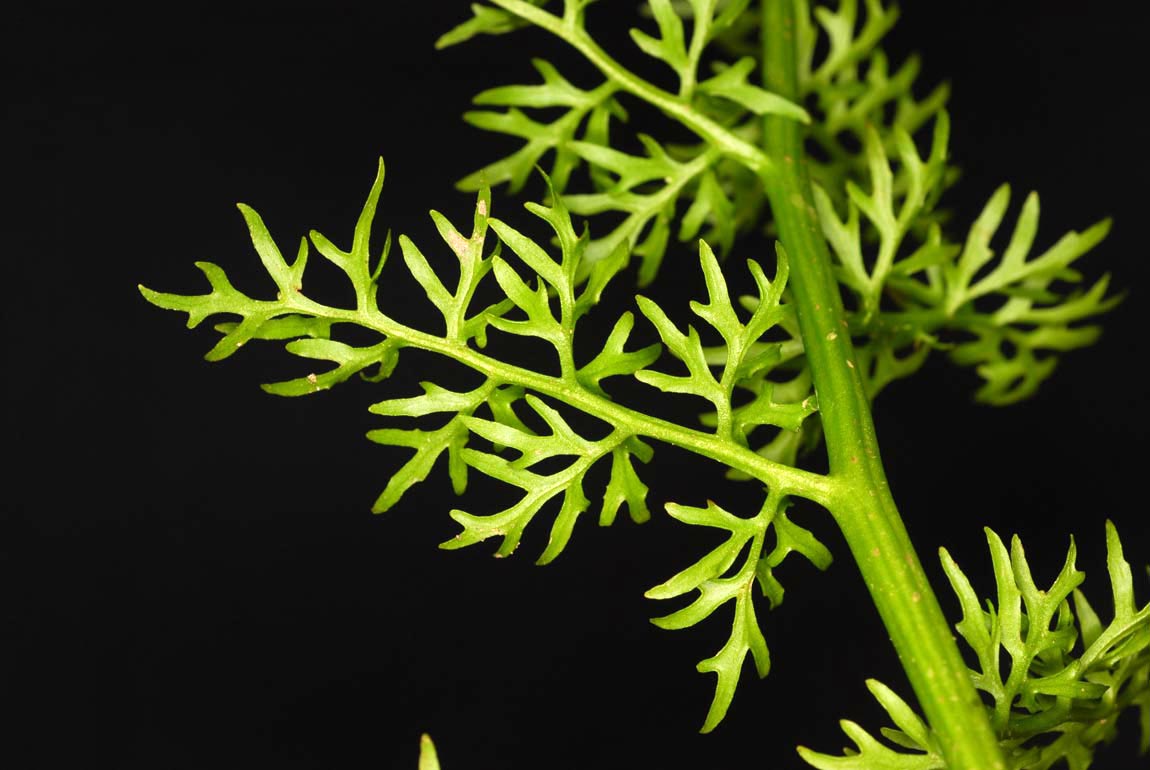
It is a fern, not a stem plant, and it behaves like nothing else in the tank. Plant it in the substrate and it makes a soft, bright-green bush of finely divided fronds. Let it float and it spreads a shaggy curtain across the surface with roots trailing down — the best fry and shrimp cover you can get. It grows fast enough to strip nutrients out of the water and starve algae, and it will not ask you for CO2, high light or soft water to do any of it.
Do not bury the crown. The single most common way this plant is killed. The base where the fronds meet the roots must sit at or just above the substrate surface. Bury it and it rots within a fortnight, no matter how good everything else is. If you are unsure, float it instead — it grows perfectly well that way and roots itself down later if it wants to.
Care Snapshot
| Scientific name | Ceratopteris thalictroides 'China' |
| Also known as | Water Sprite, Indian Fern, Water Horn Fern |
| Family | Pteridaceae — an aquatic fern |
| Origin | Pantropical, native to India and tropical Asia |
| Plant type | Rosette fern — grows rooted or floating |
| Placement | Mid-ground to background, or floating at the surface |
| Growth rate | Fast — thinning needed every few weeks |
| Lighting | Low to high — undemanding |
| CO2 | Not required |
| Temperature | 22–30 °C |
| pH | 6.0–8.0 — wide tolerance |
| Hardness | Soft to hard — handles Indian tap water well |
| Substrate | Any fine substrate, or none if floating |
| Fertilisation | Water column; a general liquid fertiliser is plenty |
| Flow | Gentle — fronds are soft and tear in strong current |
| Difficulty | Easy — genuinely beginner-suitable |
Rooted Or Floating — Pick One
Planted in substrate
Makes a fuller, more upright bush and looks intentional in an aquascape. Fronds stay finer and more divided. Needs the crown kept clear of the substrate and the roots are brittle, so it dislikes being moved once settled. Slower than floating.
Floating at the surface
Grows considerably faster with direct access to light and air, strips nutrients hard, and trails a dense root curtain that fry and shrimplets shelter in. Shades the tank below, which suits gouramis, bettas and blackwater setups but will not suit light-hungry carpet plants.
Planting And Positioning
- Anchor the roots, not the crown. Bury only the fine roots, leaving the base of the fronds exposed. A small stone or a plant weight holds it down until it takes hold.
- Give it room. A single plant fills a surprising amount of space within a month. Do not plant it in a tight row with anything you care about.
- Keep it away from the filter outflow. The fronds are soft and shred in direct current.
- It is a nutrient sponge — use that. In a new or algae-prone tank, float a few plants for the first couple of months. They outcompete algae for nitrate and phosphate, then you remove them once the tank stabilises.
- Expect it to look different from the photo. Frond shape varies considerably with light, whether it is floating or rooted, and how fast it is growing. Broad simple leaves and finely dissected ones can appear on the same plant.
Propagation — It Does This Itself
You do not propagate this plant so much as harvest it. Baby plantlets form directly on the margins of mature fronds, develop their own fronds and roots while still attached, then break away and float off to establish on their own. An older frond can carry a dozen. To multiply it deliberately, leave an ageing frond in place until the plantlets are 2–3 cm across, then detach them and plant or float them. One plant becomes a tank full in a few months, which is also why regular thinning is part of keeping it.
Disposing Of Surplus
This species is native to India, so it poses no invasion risk in its home range — but it is a vigorous coloniser and has naturalised in places well outside it, and plantlets establish from the smallest fragment. Do not tip trimmings into a drain, pond, canal or storm water line as a matter of habit, wherever you are. Dry them out or bag them for household waste, or better, pass surplus to another aquarist. Given how fast it multiplies, you will have plenty to give away.
Growing It In Indian Conditions
- Hard, alkaline tap water is not a problem. This is a native Indian species with a wide tolerance range. No RO, no buffering, no soil substrate required — which puts it in a very small group among the plants people actually want.
- Summer heat is handled easily. Comfortable to 30 °C and beyond, where most popular stem plants are already struggling. If April and May wipe out your Rotala and Cabomba, this is what keeps the tank planted through it.
- No heater needed anywhere in India for most of the year.
- The obvious pairing is a betta or gourami tank. Floating water sprite gives labyrinth fish the shaded, covered surface they want, and the root curtain doubles as fry cover if they spawn.
What You Receive
Healthy plants grown and held at our Bengaluru facility. Frond size and shape vary naturally and will change to suit your own lighting within a few weeks. Some older fronds may be shed after planting while the plant adapts — this is normal and new growth follows quickly.
Covered by the Best4Pets live arrival guarantee. Please film an unboxing video before opening the bag — it is required for any DOA claim.